Find Top Attractions in India
Entry Fee & Ticket
Timings - Iltutmish's tomb opens daily from 7 am to 10 pm., Entry Fee - Rs. 35 for Indians Rs. 250 for foreigners. | Indians - ₹35/-, Foreigners - ₹250/- to ₹550/- , Children below 15 years - Free
Opening Time & Days
The Tomb of Iltutmish is opening and closing timing is 7:00 AM to 10:00 PM.
Open Days
Tomb of Iltutmish is open every day for visitors.
Best Time to Visit
January, February, March, April, May, June
Place Visit With
Place Type
Official Info
Website 🔗Nearest Metro Stations
Tomb of Iltutmish Nearby Bus Stops
How to Reach Tomb of Iltutmish
Here's the closest transport hub for each option, with the distance from Tomb of Iltutmish.
-
8.5 km awayBy air · Nearest AirportFly into IGI New Delhi Airport
-
5.6 km awayBy rail · Nearest Railway StationTake a train to Safdarjung Railway Station
-
16.0 km awayBy road · Nearest Bus TerminalCatch a bus from Kashmere Gate ISBT
About Tomb of Iltutmish
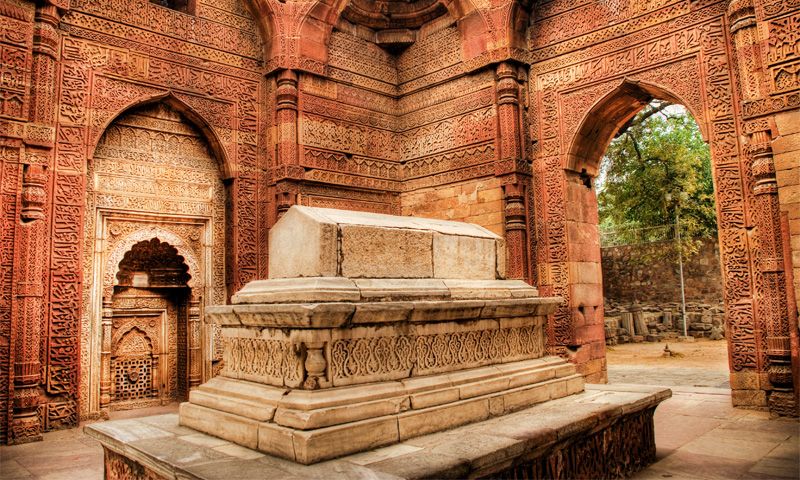
The Tomb of Iltutmish, located in Mehrauli, Delhi, is an early 13th-century architectural landmark built during the reign of Sultan Shams-ud-din Iltutmish (r. 1211–1236 CE) of the Delhi Sultanate. It is one of the earliest surviving examples of Indo-Islamic architecture, combining Islamic geometric designs with traditional Indian patterns. Covering about 1.6 hectares, the tomb served as both a funerary complex and a symbol of political power. Key features include a large central dome, detailed sandstone carvings, pointed arches, and decorative patterns inspired by earlier Ghaznavid and Ghurid styles. The monument is an important cultural and tourist site, reflecting the early development of Islamic architecture in India.
Architecture of Tomb of Iltutmish
The Tomb of Iltutmish is an excellent example of early Indo-Islamic architecture, blending Islamic structural forms with Indian decorative styles. Built mainly with red sandstone and mortar, the tomb shows advanced building techniques of its time, including corbelled domes and pointed arches. It was commissioned by Sultan Iltutmish during the Delhi Sultanate (1211–1236 CE).
Key architectural features and structures within the complex include:
- Central domed chamber housing Iltutmish's cenotaph
- Four prominent gateways forming the enclosure
- Smaller subsidiary tombs within the complex
- Extensive walled courtyard surrounding the tomb
- Intricately carved sandstone panels with geometric and floral motifs
- Mihrab niche and Islamic inscriptions in Kufic and Naskh script
The layout emphasizes symmetry and axial planning, while the combination of high domes, slender columns, and decorative brackets highlights the innovative design practices of early Delhi Sultanate architecture.
Interesting facts about Tomb of Iltutmish
- This is the tomb of the Sultan of Delhi from the 13th century slave dynasty.The tomb itself is of marble and the structure around it is made of red sandstone.The Iltutmish tomb has three entrances, north, south and east respectively.The mausoleum is a place worth visiting not only for its historical and architectural significance, but also to witness the change in Indian architectural design and planning.Several inscriptions in Kufic script provide insights into the reign of Iltutmish and the Delhi Sultanate era.It is beautifully carved with lotus, bobbles and chains which add to the charm and glory of the monument.
Tomb of Iltutmish FAQs:
Tomb of Iltutmish Neighbourhood
Explore nearby places within 5 km of Tomb of Iltutmish including attractions, cinemas, colleges, hospitals and more.
Explore Other Attractions Nearby
More places to visit in Delhi
| Paid Entry |
| Paid Entry |
| Free Entry |

| Free Entry |

| Free Entry |
| Free Entry |
| Free Entry |
| Paid Entry |

| Paid Entry |
| Free Entry |
| Free Entry |
| Free Entry |
| Free Entry |
| Free Entry |

| Free Entry |
| Free Entry |
| Free Entry |
| Free Entry |
| Free Entry |

