Find Top Attractions in India
Entry Fee & Ticket
Sinhagad Fort Cafe open from 09:00 am to 06:00 am (Mon to Thur), 09:00 am to 05:00 pm (FRi to Sun), Entry fee Rs 10. | No Entry Fee, Entry fee only for vehicles
Opening Time & Days
Sinhagad Fort opening and closing timing is 05:00 AM – 06:00 PM
Open Days
The Sinhagad Fort open every day for visitors
Best Time to Visit
January, February, March, April
Place Visit With
Place Type
Official Info
Website 🔗How to Reach Sinhagad Fort
Here's the closest transport hub for each option, with the distance from Sinhagad Fort.
-
28.8 km awayBy air · Nearest AirportFly into Pune Airport
-
21.8 km awayBy rail · Nearest Railway StationTake a train to Pune Railway Station
-
28.5 km awayBy road · Nearest Bus TerminalCatch a bus from Vallabhnagar State Transport Bus Stand
About Sinhagad Fort
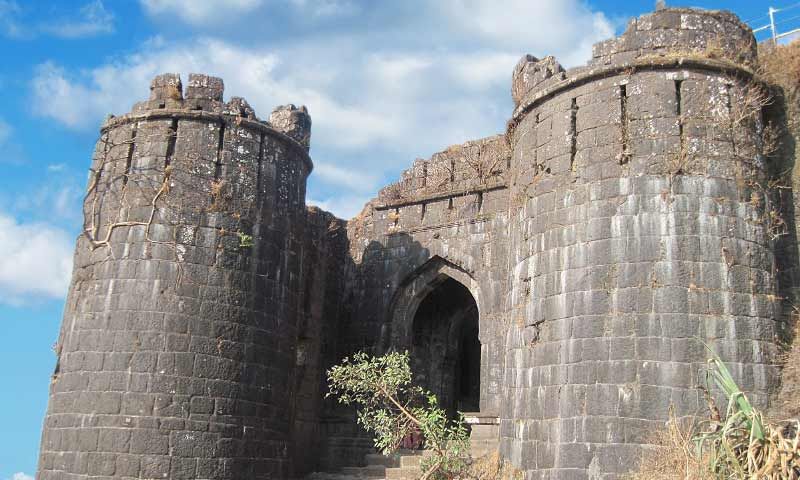
Sinhagad Fort, located on Sinhagad Ghat Road near Pune, Maharashtra, is a historic hill fort renowned for its strategic importance in the Maratha Empire. It began more than a thousand years ago, with several dynasties, including the Bahmani Sultanate and the Marathas under Chhatrapati Shivaji Maharaj, fortifying its walls. The fort is located on top of a steep hill, spread over approximately 1,300 hectares, and offers spectacular views of the surrounding Sahyadri range. Renowned for its military history, including the famous Battle of Sinhagad in 1670, the fort features strong defensive walls, bastions, and gates, along with natural terrain. Its design reflects the art of Maratha architecture, including local stone, strategic walls and hilltop site, which influenced later hill forts in the region.
Architecture of Sinhagad Fort
Sinhagad Fort exhibits the typical Maratha hill fort design, combining the natural contours of the Sahyadri mountains with defensive advantages. The fort was extensively rebuilt in the 17th century under the Marathas, particularly Shivaji Maharaj, although its foundations date back to the Bahmani Sultanate. Built mostly of local basalt stone, the fort utilizes robust masonry techniques adapted to the steep slopes, ensuring strength and defense.
- Main entrance gate (Nagarkhana Darwaza)
- Bastions and defensive walls
- Temples, including Kedareshwar and Bhairavnath
- Water reservoirs and granaries
- Watchtowers and lookout points
- Caves and smaller forts within the complex
The combination of strategic elevation, thick stone walls, and fortified gates highlights the Maratha emphasis on security and military innovation while reflecting local craftsmanship and topographical adaptation.
Interesting facts about Sinhagad Fort
- The fort was the site of the famous Battle of Sinhagad in 1670, showcasing Maratha valor and military strategy.Its defensive walls were constructed using local basalt, optimized for hilltop fortification and seismic stability.Several water tanks and step wells inside the fort ensured year-round water supply, demonstrating engineering foresight.The fort’s gates and bastions are aligned to maximize visibility of approaching enemies, illustrating advanced military planning.Archaeological surveys reveal remnants of ancient structures predating Maratha fortifications, highlighting layered historical occupancy.Sinhagad’s natural elevation and steep escarpments make it an exemplary model of Maratha hill fort design integrated with geography.
Sinhagad Fort FAQs:
Sinhagad Fort Neighbourhood
Explore nearby places within 5 km of Sinhagad Fort including attractions, cinemas, colleges, hospitals and more.
Explore Other Attractions Nearby
More places to visit in Pune
| Paid Entry |

| Free Entry |

| Free Entry |

| Free Entry |

| Paid Entry |

| Free Entry |

| Free Entry |
| Free Entry |

| Free Entry |
| Free Entry |

| Free Entry |


| Paid Entry |
| Paid Entry |

| Free Entry |

| Free Entry |
| Free Entry |
| Free Entry |

