Find Top Attractions in India
Entry Fee & Ticket
Ruins of Pataliputra open from 10:30 am to 04:00 pm all days in week, Entry fee Rs 5. | Indians – ₹5/-, Foreigners- ₹200/-, Children- below 15 years – Free
Opening Time & Days
Ruins of Pataliputra opening and closing timing is 10:00 AM - 4:00 PM
Open Days
Ruins of Pataliputra is open every day for visitors.
Best Time to Visit
May, June, July, August
Place Visit With
Place Type
Official Info
Website 🔗Nearest Metro Station
About Ruins of Pataliputra
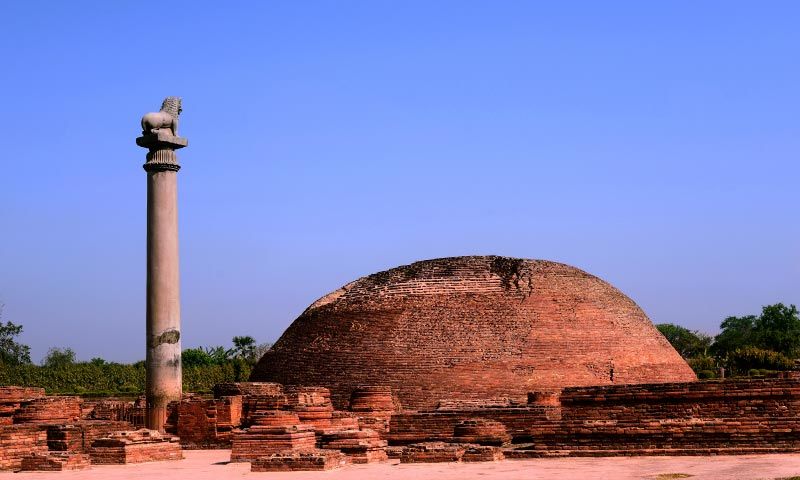
The Ruins of Pataliputra at Kumrahar mark the archaeological remains of the ancient capital of the Magadha Empire, flourishing between the 5th century BCE and 4th century CE. Pataliputra gained prominence under the Mauryan dynasty, particularly during the reign of Emperor Ashoka, and later under the Guptas. As one of India's earliest planned royal cities, the site holds immense cultural and tourism significance. Excavations spanning approximately 150 hectares have uncovered structural foundations, pillars, and urban remains. Its key features demonstrate advanced town planning influenced by early Indian and Persian traditions.
Architecture of Ruins of Pataliputra
The architectural remains of Pataliputra represent early ancient Indian imperial architecture, primarily associated with the Mauryan dynasty (c. 321–185 BCE) and later the Gupta period (c. 4th–6th century CE). Archaeological evidence from Kumrahar indicates the presence of large pillared halls constructed using polished sandstone columns and timber superstructures, a technique characteristic of Mauryan engineering. The most notable discovery is the 80-pillared hall, believed to date from the reign of Emperor Ashoka in the 3rd century BCE. It demonstrates advanced load-bearing design and special planning.
The city was ruled by the Haryanka, Nanda, Maurya and Gupta rulers one after the other, and its architecture changed over the centuries. Its layout demonstrates systematic urban planning, with a drainage system, fortified boundaries, and administrative zones. Excavations by the Archaeological Survey of India have confirmed that wooden architecture was used along with stone for durability.
- 80-pillared assembly hall
- Ancient palace foundations
- Residential and administrative structures
- Drainage and water management systems
- Fortification remnants
Interesting facts about Ruins of Pataliputra
- Pataliputra was described by Greek ambassador Megasthenes as a vast fortified city.The 80-pillared hall shows high-precision stone polishing unique to the Mauryan era.This place is known for couples who go out freely without thinking much about the society or culture.Patna has a good park to visit. It has 2 clear excavation sites and an Ashoka well.It displays a pillar of sandstone which is characteristic of Mauryan polish.There is also a small museum here. The excavated pillars have been kept in the museum.
Ruins of Pataliputra FAQs:
Ruins of Pataliputra Neighbourhood
Explore nearby places within 5 km of Ruins of Pataliputra including attractions, cinemas, colleges, hospitals and more.
Explore Other Attractions Nearby
More places to visit in Patna
| Free Entry |
| Free Entry |
| Free Entry |
| Free Entry |
| Paid Entry |

| Free Entry |

