Find Top Attractions in India
Entry Fee & Ticket
No Entry Fee 09:00 AM - 04:00 PM Friday to Sunday | Indian (Below 8 years) - ₹0/-, Indian (8 years and above) - ₹50/-, also Foreigners (per person) - ₹50/-
Opening Time & Days
President house opening and closing timings is 09:30 AM – 04:30 PM, Entry will not be allowed after 04:00 PM.
Open Days
The Rashtrapati Bhavan will be open for visitors only six days a week from Tuesday to Sunday., Closed for visitors on Monday & Gazetted Holidays
Best Time to Visit
January, February, March
Place Visit With
Place Type
Official Info
Website 🔗Nearest Metro Stations
Rashtrapati Bhavan Nearby Bus Stops
How to Reach Rashtrapati Bhavan
Here's the closest transport hub for each option, with the distance from Rashtrapati Bhavan.
-
11.2 km awayBy air · Nearest AirportFly into IGI New Delhi Airport
-
3.0 km awayBy rail · Nearest Railway StationTake a train to Shivaji Bridge Railway Station
-
7.0 km awayBy road · Nearest Bus TerminalCatch a bus from Kashmere Gate ISBT
About Rashtrapati Bhavan
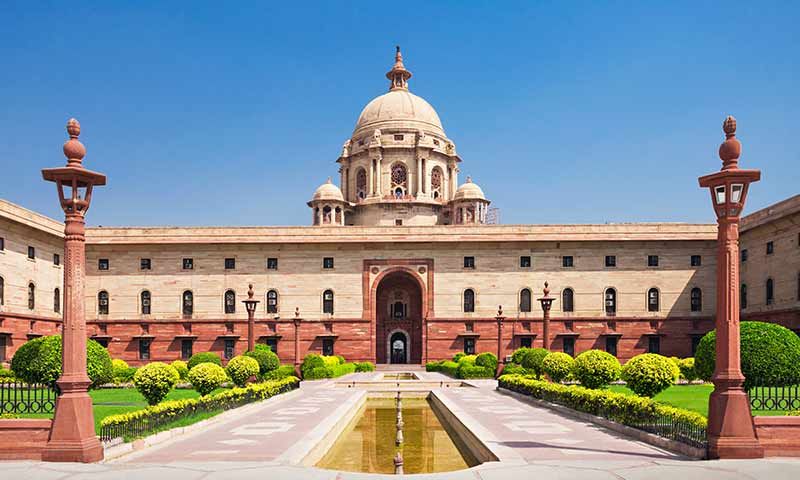
Rashtrapati Bhavan, located in Delhi's Central Secretariat Area, is the official residence of the President of India and one of the largest presidential estates in the world. Originally built as the Viceroy's House during the British Raj, construction began in 1912 and was completed in 1929 during the reign of King George V. Spread over approximately 130 hectares, this monument marks India's transition from colonial rule to a sovereign republic. Designed with a fusion of classical European and Indian architectural influences, it is a major cultural landmark and a key attraction showcasing national authority, heritage, and historical continuity.
Architecture of Rashtrapati Bhavan
Rashtrapati Bhavan is a fine blend of classical European architecture and elements of Indian style, often called Indo-classical architecture. It was designed by Sir Edwin Lutyens, and Herbert Baker contributed to the adjacent Secretariat Buildings. Construction took place between 1912 and 1929, during the British Crown's rule in India. Constructed primarily of red and beige sandstone, using load-bearing masonry techniques, the structure incorporates Indian designs such as chhatris, jaalis, and a large copper dome inspired by the Sanchi Stupa. The symmetrical layout emphasizes royal authority, while Indian decorative elements symbolically integrate local traditions. Advanced engineering ensured natural ventilation, structural balance, and durability, making it one of the most technically sophisticated buildings of its time.
- Main Forecourt and Jaipur Column
- Durbar Hall with central dome
- Ashoka Hall (formerly State Drawing Room)
- Amrit Udyan (formerly Mughal Gardens)
- Presidential Estate gates and courtyards
- Residential wings and administrative blocks
Interesting facts about Rashtrapati Bhavan
- Rashtrapati Bhavan, also known as Rashtrapati Bhavan, is the second largest in the world after the Quirinal Palace in Rome, Italy.It took 17 years to complete as its construction began in 1912 and was completed in 1929, employing approximately 29,000 people.It is built on the Raisina Hill which was named after one of the two villages (Raisini and Malcha) and was cleaned to make this haveli. It was built by an architect named Sir Edwin Landseer Lutyens.It includes various gardens of different shapes like rectangular, tall and circular. The most mesmerizing sight among them was the circular garden with flower beds of terraced bowls blooming in various colours.The Uphaar Museum of Rashtrapati Bhavan houses a 640 kg silver chair of King George V in which he sat in the Delhi Durbar in 1911.Its layout symbolizes authority through axial symmetry and elevated positioning.
Rashtrapati Bhavan FAQs:
Rashtrapati Bhavan Neighbourhood
Explore nearby places within 5 km of Rashtrapati Bhavan including attractions, cinemas, colleges, hospitals and more.
Explore Other Attractions Nearby
More places to visit in Delhi
| Paid Entry |
| Paid Entry |
| Free Entry |
| Free Entry |
| Free Entry |
| Free Entry |
| Free Entry |
| Paid Entry |
| Paid Entry |
| Free Entry |
| Free Entry |
| Free Entry |
| Free Entry |
| Free Entry |
| Free Entry |
| Free Entry |
| Free Entry |
| Free Entry |
| Free Entry |

