Historical Forts & Tombs to Visit in Delhi


20 Historical Forts & Tombs to Visit in Delhi
Red Fort Hauz Khas Fort Qutub Minar Humayun's Tomb Purana Qila Safdarjung's Tomb Feroz Shah Kotla Fort Barakhamba Tomb Atgah Khan’s Tomb Tughlaqabad Fort Sikandar Lodi Tomb Bhuli Bhatiyari Ka Mahal Talaqi Darwaza Sher Mandal Alai Minar Qila Rai Pithora Tomb of Iltutmish Tomb of Imam Zamin Flagstaff Tower Tomb of Adham Khan
Red Fort, Delhi
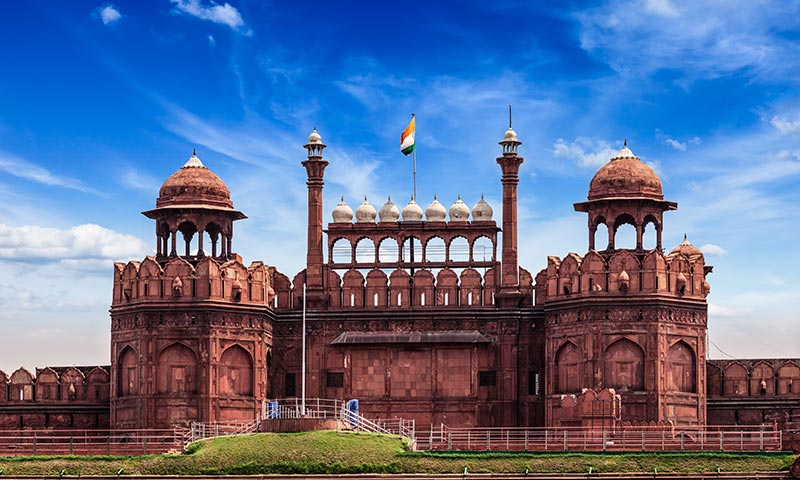
The iconic fort also known as Lal Quila is located in Chandni Chowk Old Delhi. Constructed in red sandstone, it a is wonderful epitome of imposing power, architectural brilliance, and pompous style of the Mughal emperors. Its outstanding Main gate commonly known as Lahori gate attracts crowd, especially on Independence Day. It leads into the huge compound and a veritable treasure trove of magnificent buildings including Drum House, Peral Mosque, Royal Baths, and Palace of Color and white marble halls. Enjoy a lively evening of sound and light show as it re-creates events in India's history connected with the Red fort.
Online Tickets (ASI website):
Adults Indians (per person): ₹35/-
Foreigners (per person): ₹550/-
BIMSTEC, SAARC Countries (per person): ₹35/-
Offline Tickets (On-site Purchase):
Adults Indians (per person): ₹35/-
Foreigners (per person): ₹550/-
BIMSTEC, SAARC Countries (per person): ₹35/-
With Museum: Adults Indians (per person) - ₹56/-, Foreigners (per person) - ₹870/- also BIMSTEC, SAARC Countries ₹56/- (per person)
Entry is free for children below 15 years.
Hauz Khas Fort, Delhi
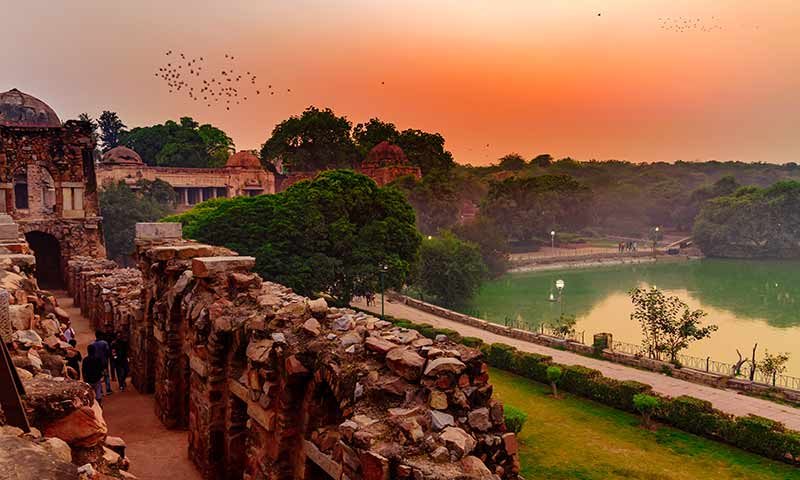
Centrally located amidst posh South Delhi, Hauz Khas is upscale quaint village boasting of the 13th-century medieval history of Delhi Sultanate reign. Hauz Khas houses a Royal water tank, an Islamic seminary, an ancient mosque, Firuz Shah Tughlaq's tomb, and pavilions. Reflecting on the cultural essence of India's glorious past, Hauz Khas offers a thrilling shopping experience as it houses outlets of leading contemporary fashion designers. The Hauz Khas Complex is open from Monday to Saturday between 10:30 Am to 7:00 Pm as it retains its old-world charm, amidst well-manicured green parks, walkways lined with ornamental trees and surrounded by modern market and residential complexes.
Qutub Minar, Delhi
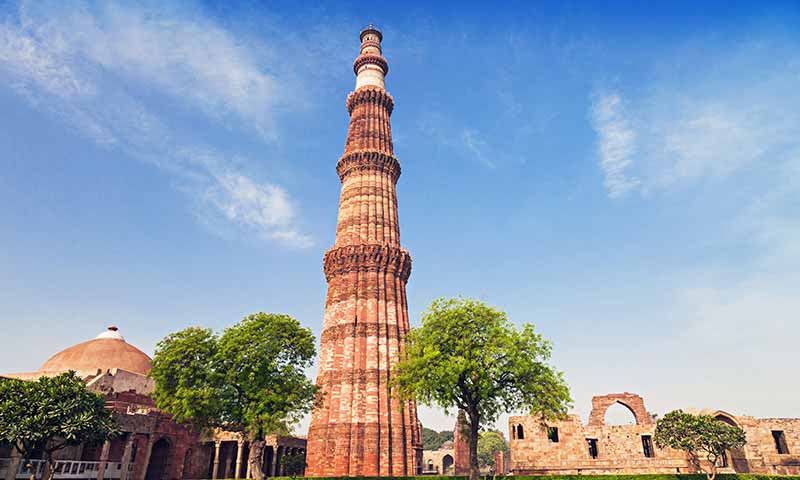
Qutab Minar one of the finest monuments in India boasting of fine architectural design. Built-in 1193 by Qutab-ud-din Aibak, the soaring conical tower of victory is, 73 m-high and has five distinct stories, each marked by a projecting balcony. this UNESCO World Heritage Site has a Quwwat-ul-Islam Mosque at the foot of the tower. A 7 m-high iron pillar stands right in the courtyard of the mosque. A band of the ancient inscription is engraved over its gate. Tourists can get an amazing birds-eye view of Delhi from its top on all days.
Online Tickets (ASI website):
Adults Indians (per person): ₹35/-
Foreigners (per person): ₹550/-
BIMSTEC, SAARC Countries (per person): ₹35/-
Offline Tickets (On-site Purchase):
Adults Indians (per person): ₹50/-
Foreigners (per person): ₹550/-
BIMSTEC, SAARC Countries (per person): ₹35/-
Humayun's Tomb, Delhi
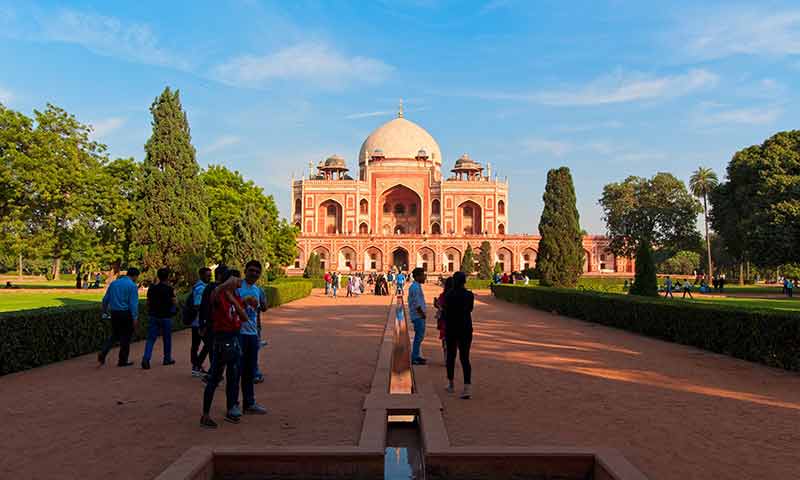
Humayun's Tomb reflects an amazing blend of Mughal and Persian architecture. Found close to Lodhi Road crossing, Jor Bagh, this superb garden tomb was designed by famous architects in the medieval era, Mirak Mirza Ghiyath and his eminent son Sayyed Muham. The construction was initiated by Hamida Banu Begum to keep the mortal remnants of Humayun, the popular Mughal Emperor. But, the construction was completed by Humayun's son Akbar. The Persian-inspired gardens surrounding the tomb are divided into four parts by causeways with a shallow water channel, connected to pools, a baradari, and hammam.
Online Tickets (ASI website):
Adults Indians (per person): ₹35/-
Foreigners (per person): ₹550/-
BIMSTEC, SAARC Countries (per person): ₹35/-
Offline Tickets (On-site Purchase):
Adults Indians (per person): ₹50/-
Foreigners (per person): ₹550/-
BIMSTEC, SAARC Countries (per person): ₹35/-
Entry is free for children below 15 years
Purana Qila, Delhi
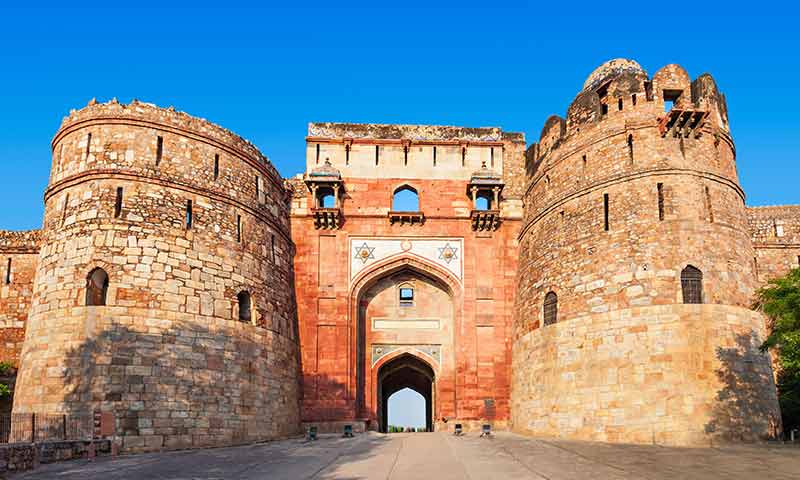
Constructed in the ancient city of Delhi, Indraprastha, Purana Quila is rectangular shaped.The solid ramparts have 3 gateways endowed with bastions on each side. It was bounded by a broad moat and was connected with river Yamuna that flows on the eastern part of the fort. The Talaqui Darwaza also famous as The northern gateway combines the characteristically Islamic sharp arch with brackets and Hindu Chhatris. The Humayun Darwaza or the Southern gateway is also made on similar lines. The walls of Purana Quila were constructed by emperor Humayun and new capital, Dinpanah was laid. The work of Purana Quila that was left incomplete was finished by Sher Shah Suri. Wonderful sound and light show are held every evening over here.
Purana Qila Lake Ticket Price: Indians (per person) - ₹20/-, Foreigners (per person) - ₹20/- also BIMSTEC, SAARC Countries ₹20/- (per person)
Purana Qila Museums Ticket Price: Indians (per person) - ₹5/-, Foreigners (per person) - ₹5/- also BIMSTEC, SAARC Countries ₹5/- (per person)
Safdarjung's Tomb, Delhi
Safdarjung's Tomb is a historical monument located in New Delhi, India. The mausoleum is dedicated to Mirza Muqeem Abul-Mansur Khan, who was the Prime Minister of the Mughal Empire during the reign of Muhammad Shah. The mausoleum is a fine example of Mughal architecture with significant influence of Persian design. It has a large garden, a central tomb and a surrounding wall with beautiful ornamentation. The main mausoleum is square in shape and is topped by a beautiful white marble dome. There are small mandapas or chhatris (domed pavilions) at the corners of the main structure, which give it a distinctive look. Safdarjung Tomb is a testament to the Mughal architectural heritage in India and is a must-see place for history enthusiasts and tourists interested in the rich heritage of the country.
Online Tickets (ASI website):
Adults Indians (per person): ₹20/-
Foreigners (per person): ₹250/-
BIMSTEC, SAARC Countries (per person): ₹20/-
Offline Tickets (On-site Purchase):
Adults Indians (per person): ₹50/-
Foreigners (per person): ₹300/-
BIMSTEC, SAARC Countries (per person): ₹35/-
Entry is free for children below 15 years
Feroz Shah Kotla Fort, Delhi
The Firoz Shah Kotla Fort, also known as the Kotla, was built on the banks of the Yamuna River due to the scarcity of water in Tughlaqabad. The majestic fort is surrounded by beautiful gardens. The main attractions here are the Topra Ashokan pillar made of polished sandstone dating to the 3rd century BC and an old baoli (stepwell). The fort was the royal citadel of the city and hence houses some important buildings. It was very grand and luxurious in the 14th century. Visitors like the invader Timur as well as other contemporary historians have left wonderful descriptions of its buildings.
Online Tickets (ASI website):
Adults Indians (per person): ₹20/-
Foreigners (per person): ₹250/-
BIMSTEC, SAARC Countries (per person): ₹20/-
Offline Tickets (On-site Purchase):
Adults Indians (per person): ₹25/-
Foreigners (per person): ₹300/-
BIMSTEC, SAARC Countries (per person): ₹25/-
Entry is free for children below 15 years
Barakhamba Tomb, Delhi
The Barakhamba Tomb is an octagonal tomb built during the Mughal period in the early 17th century. It is known for its unique design of 12 pillars, located in the city of Delhi, India. This mausoleum was built during the Mughal period as a burial place for an unknown nobleman. The exact identity of the person buried there remains a mystery. The architecture of the Barakhamba mausoleum reflects the typical Mughal style, characterized by intricate ornamentation, domed structures and ornamental features. The Barakhamba Tomb is a protected monument under the Archaeological Survey of India (ASI) and is recognized as a site of historical importance.
Atgah Khan’s Tomb, Delhi
The Tomb of Atgah Khan is a 16th-century mausoleum located on the outskirts of the Nizamuddin Dargah complex in Delhi, India. The Tomb of Atgah Khan is the final resting place of Atgah Khan, a great figure and a prominent figure in the Mughal court during the reign of Emperor Akbar. He was a loyal and trusted guardian of Akbar and served as a teacher and advisor to the young prince. This mausoleum was built after his death to honor his memory. The tomb of Atgah Khan is located close to other historical sites, making it part of a larger historical and cultural experience.
Tughlaqabad Fort, Delhi
Tughlaqabad Fort is a ruined fort located in Delhi, built in 132 by Ghiyas-ud-din Tughlaq, the founder of the Tughlaq dynasty and ruler of the Delhi Sultanate. The most attractive aspect of the Tughlaqabad Fort is its massive stone walls, which surround the entire complex and add to the grandeur of the fort. This architecture displays the impressive engineering skills of the Tughlaq dynasty and their focus on defence. The layout of the fort, with its robust town plan and octagonal corner towers, sets it apart from other historical sites. The organization of bastions, bastions, gates and watchtowers within the walls reflects a strategic design that emphasized both security and functionality. The fort is an integral part of Delhi's cultural heritage, reminding us of the city's rich past and its role as a center of power and culture during the Tughlaq period.
Online Tickets (ASI website):
Adults Indians (per person): ₹20/-
Foreigners (per person): ₹250/-
BIMSTEC, SAARC Countries (per person): ₹20/-
Offline Tickets (On-site Purchase):
Adults Indians (per person): ₹50/-
Foreigners (per person): ₹300/-
BIMSTEC, SAARC Countries (per person): ₹35/-
Entry is free for children below 15 years
Sikandar Lodi Tomb, Delhi
The tomb of Sikandar Lodi is the mausoleum of Sikandar Lodi, the second ruler of the Lodi dynasty. It is located in the Lodi Gardens of Delhi. This mausoleum was to some extent inspired by the mausoleum of Muhammad Shah. The tomb has been constructed mainly using red sandstone, a typical material of the Lodi period. The ornate carvings and inscriptions on the sandstone reflect the craftsmanship of the time. The tomb has inscriptions in Arabic and Persian, which provide historical information about Sikandar Lodi and his reign.
Bhuli Bhatiyari Ka Mahal, Delhi
Bhuli Bhatiyari's palace was built during the 14th century by Firoz Shah Tughlaq as a hunting lodge. Nestled in the Aravalli Hills, this hunting lodge is surrounded by dense forests that form part of the central mound in Delhi. The architecture of Bhuli Bhatiyari Mahal is precisely related to its history as the history of Bhuli Bhatiyari Mahal is very old, similarly its architecture is equally old and magnificent. This building of Delhi is about 700 years old. Despite its spooky reputation, Bhuli Bhatiyari's palace is a popular spot for photography and nature walks. The palace is situated in the middle of a dense forest, which provides a calm and serene environment to the visitors.
Talaqi Darwaza, Delhi
The Talaki Darwaza is an imposing gateway in the western part of the Purana Qila. This grand gateway was built by Sher Shah Suri, a powerful king of the Sur dynasty, or apparently by his successors. This is the third gate of the site, which is made of red sandstone and the two Bastille towers are of white marble. The Talaki Darwaza is of two storeys in height. The use of blue to enhance the architecture of the doors was first seen in Delhi, an important fort in central India, as a form of innovation in architecture. There are jharokhas at the top of the entrance and some elaborate work on it, possibly with some carvings in Persian or Arabic.
Sher Mandal, Delhi
Sher Mandal is an important historical structure located in the Purana Qila complex in Delhi, India. It has historical significance due to its association with the Mughal Emperor Humayun and its architectural heritage. The Sher Mandal is a two-storied octagonal tower, with a simple yet elegant design. Sher Mandal was initially designed as a library and observatory. Humayun had a keen interest in astronomy and literature, and often used the tower to study celestial phenomena and conduct his scholarly pursuits. The tower serves as a reminder of the cultural and architectural contributions of the Mughal dynasty during the early phase of Mughal rule in India.
Alai Minar, Delhi
Alai Minar is an unfinished monument located in the Qutub complex. Alai Minar is a huge structure which was started by Aladin Khilji in 1311 AD. Sultan Alauddin Khilji wanted the size of the Alai Minar to match the increased height of the mosque and also wanted a second Minar of Victory under his name and hence the Alai Minar was introduced. Unfortunately, the construction work was abandoned after the death of Sultan Alauddin Khilji in 1316 AD and his successors could not continue the construction further. The intricate stone carvings of the monument display the beauty of the monument even though it is incomplete.
Qila Rai Pithora, Delhi
Qila Rai Pithora, also known as Rai Pithora's Fort, is an ancient fort located in Delhi, India. It was originally built by the Rajput king Prithviraj Chauhan (also known as Rai Pithora) in the 12th century. Qila Rai Pithora was the capital of the Chauhan dynasty under the rule of Prithviraj Chauhan. It played an important role in the history of Delhi and the surrounding region. The architecture of the fort reflects a mixture of Rajput and Islamic styles. It had massive walls and gates, including the famous "Hauz Khas Gate", which is now a well-preserved monument. The Qutub complex including Qila Rai Pithora has been designated as a UNESCO World Heritage Site in recognition of its cultural and historical importance.
Tomb of Iltutmish, Delhi
The tomb of Iltutmish is one of the important ancient monuments of Delhi. The mausoleum, Qutub Minar complex, was built in 1235 AD. It is located just outside the north-west corner of Quwwat-ul-Islam near Qutub Minar. The rich interior and simple exterior are the main attractions of this mausoleum. Of these, the central one is situated higher than the other two and is richly decorated with marble. In its center is a mausoleum, which is about 9 meters square inside and its face is made of red sandstone. There are three mihrabs (prayer niches) inside the tomb. The tomb of Iltutmish in Delhi itself is quite simple, but its entrance is intricately carved with geometric and arabesque patterns. Reminiscent of ancient Delhi, this mausoleum is known for its simple architecture.
Tomb of Imam Zamin, Delhi
The Tomb of Imam Zamin is a mausoleum that houses the remains of the 16th-century Islamic cleric Muhammad Ali. It is located in the Qutub Minar complex in Delhi, India and was built from the ground up between 1537 and 1538 during the reign of the Mughal Emperor Humayun. The mausoleum deceptively resembles a multi-storey building, a common feature of the Lodhi dynasty. The sides of the building are latticed and it is possible to peep inside to see a marble tomb. It is a beautiful little building and looks interesting as it is right in the sight line of the more famous tower in the background. One of the more interesting structures worth seeing inside the complex.
Flagstaff Tower, Delhi
Flagstaff Tower is a one-room, castellated tower built in 1828 as a signal tower, located at Kamla Nehru Ridge near the current North Campus of the University of Delhi in Delhi, India. The Flagstaff Tower played an important role during the Indian Rebellion of 1857, when rebel East India Company forces captured Delhi. Built by the British Indian Army, this building was part of the British Cantonment and was used as a signal tower. Before reforestation began in 1910, the area where the tower was built was the highest point on the ridge and was mostly barren, covered with low-lying bush. Today it is a monument and a "protected monument" under the Archaeological Survey of India.
Tomb of Adham Khan, Delhi
The mausoleum is located within the larger Mehrauli Archaeological Park, which is a treasure trove of historical monuments including the Qutub Minar complex. The tomb of Adham Khan was built by Akbar in the 16th century. Though it was commissioned by the Mughal emperor, it was built in the Lodi style of architecture. Adham Khan was a notable figure during the reign of Emperor Akbar, and his tomb holds historical and architectural significance. Visitors to the park can explore various historical structures and learn about the rich history of Delhi.
EXPLORE PLACES IN DELHI BY CATEGORY: